
Baobab Fm
Type Locality and Naming
Bongor Basin (SW Chad). Outcrops in the northern of the basin, with the lower part of the section outcropping in the southern part of the basin
Synonym:
Reference: Chen et al., 2018; Wang et al., 2022; Dou et al., 2023
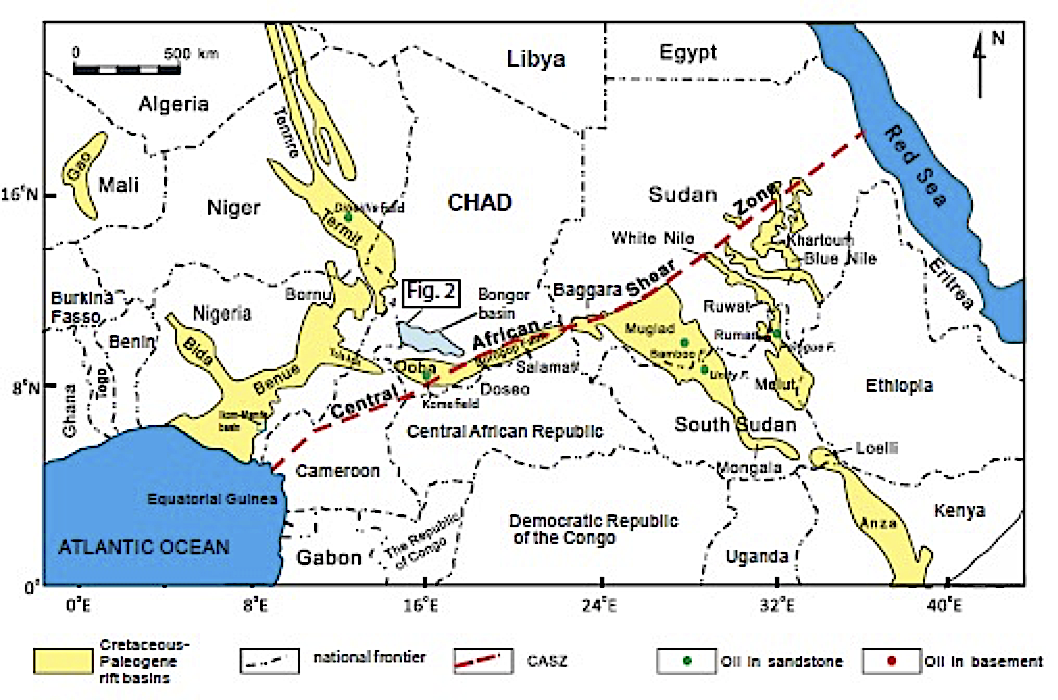
[Fig. 1: Simplified map of the West and Central African Rift System (WCARS) showing the major features discussed in the text and the location of the Melut Basin in South Sudan (modified from Genik, 1993)]
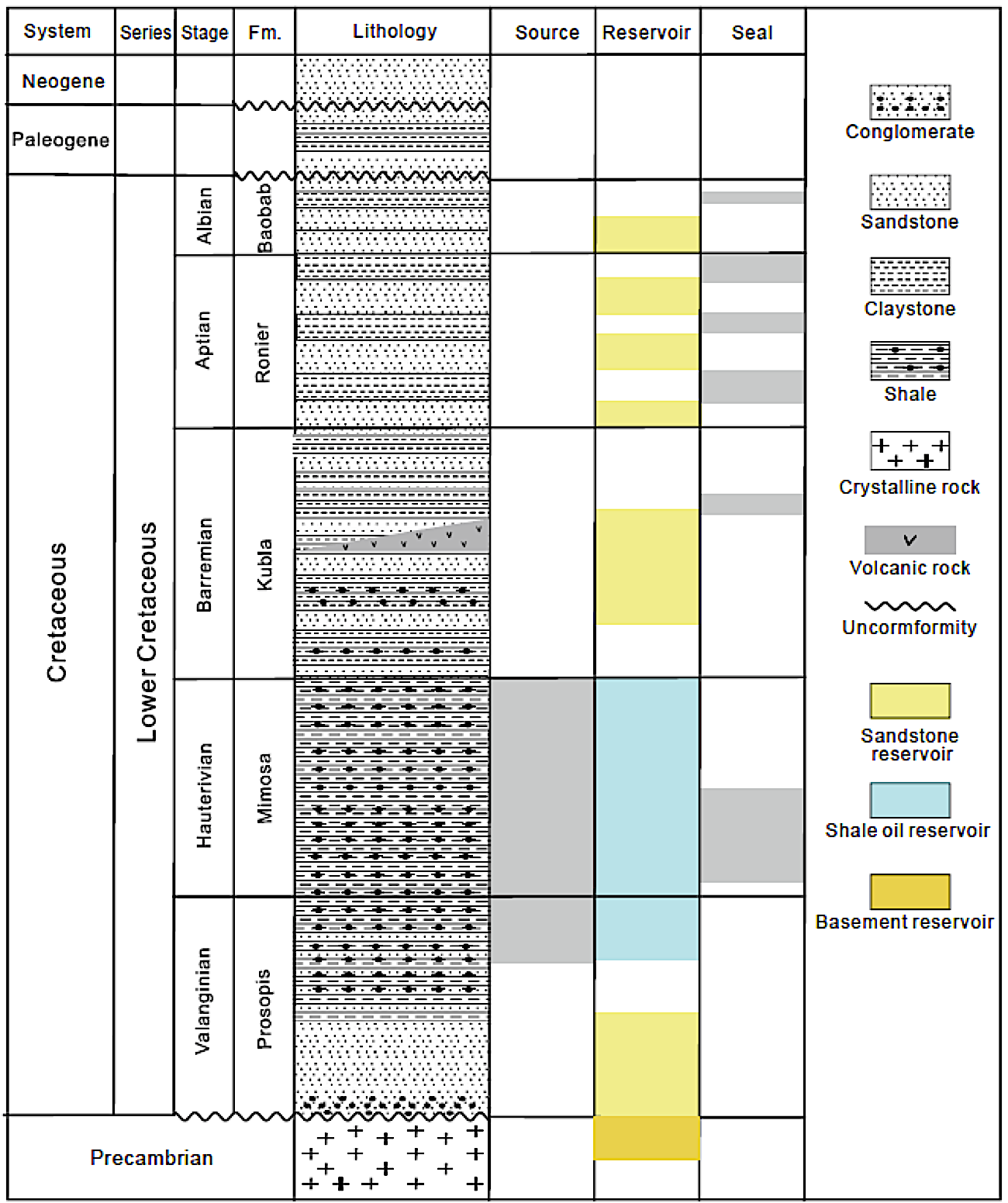
[Fig. 2: Stratigraphic chart for the Bongor Basin showing the positions of producing reservoirs, source rocks and seals (from Dou et al., 2020)]
Lithology and Thickness
Greyish yellow coarse-grained sandstones interbedded with thin bedded mudstones (Chen et al., 2018; Wang et al., 2022). The residual thickness of the Baobab Formation is 200–1200 m. In the northern part of the basin, it is mainly composed of fine sandstone to gritstone. The lower section in the southern part contains a large set of mudstone intercalated with thin siltstone (Dou et al., 2023).
Relationships and Distribution
Lower contact
Upper contact
Regional extent
GeoJSON
Fossils
Age
Depositional setting
Additional Information
Wang Y., Xu G., Zhou W., Liang J., He S. (2022): Predicting Granitic Buried-Hill Reservoirs Using Seismic Reflection Data – A Case Study From the Bongor Basin, Southwestern Chad. Frontiers in Earth Science, pp. 1-13
Dou L., Xiao K., Wang J. (2023): Petroleum Geology and Exploration of the Bongor Basin. Petroleum Industry Press.